

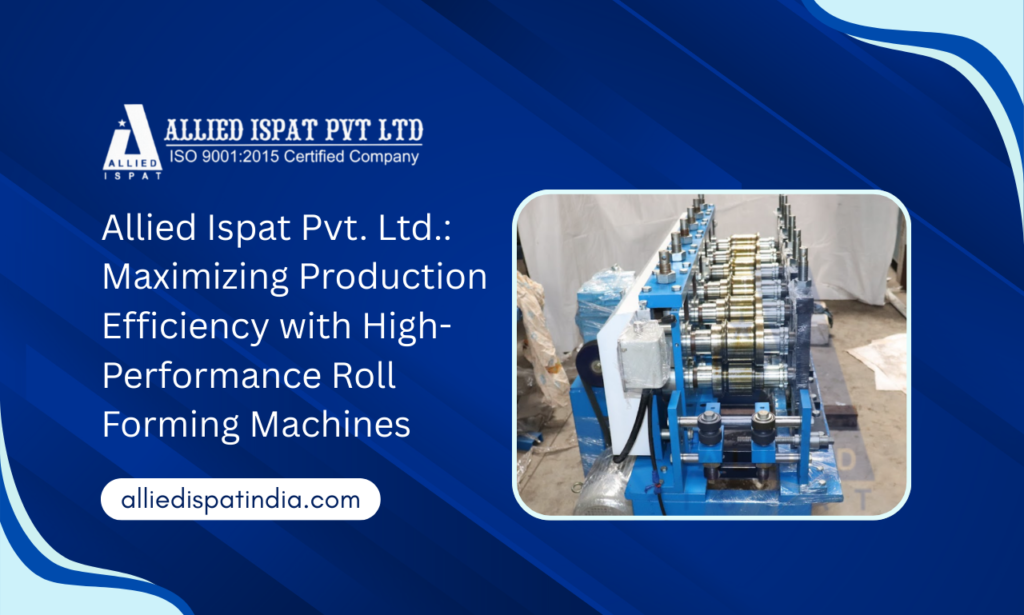
How Roll Forming Machines Improve Production Efficiency in Manufacturing
In today’s competitive manufacturing environment, productivity and precision are no longer optional—they are essential. Industries that rely on steel components must produce high volumes of products while maintaining strict quality standards, minimizing waste, and reducing operational costs. Whether it is construction, infrastructure, automotive manufacturing, or industrial fabrication, companies are constantly searching for technologies that streamline production and improve efficiency.
One of the most transformative technologies in modern metal fabrication is roll forming. This advanced manufacturing process allows steel sheets and coils to be shaped into precise profiles through a continuous bending operation. By automating the forming process and reducing manual intervention, roll forming machines help manufacturers achieve faster production cycles, consistent quality, and lower manufacturing costs.
Allied Ispat Pvt. Ltd., a trusted Roll Forming Machine Manufacturer in India, has been delivering advanced steel forming solutions that support the evolving needs of modern manufacturing industries. With a strong focus on precision engineering, durable machine design, and industrial-grade manufacturing technology, Allied Ispat India provides roll forming machines that enable businesses to improve productivity while maintaining superior product quality.
This article explores the fundamentals of roll forming technology, how roll forming machines work, and why they are considered essential equipment for improving production efficiency in manufacturing industries.
Understanding the Roll Forming Process
Roll forming is a continuous metal forming process used to create uniform cross-sectional profiles from sheet metal or steel coils. Unlike conventional metal fabrication methods that involve multiple operations such as stamping, pressing, or bending, roll forming gradually shapes metal using a series of rollers.
Each roller station performs a small bending operation, progressively transforming flat metal sheets into complex profiles. Because the process is continuous and automated, roll forming machines can produce large quantities of identical components with exceptional accuracy.
This technology is widely used for manufacturing products such as:
- Steel construction profiles
- Roofing and cladding sheets
- Rolling shutter slats and guides
- POP ceiling frame sections
- Cable trays and support channels
- Door and window frames
- Automotive reinforcement components
The key advantage of roll forming is its ability to combine speed, consistency, and efficiency in a single manufacturing process.
What is a Roll Forming Machine?
A roll forming machine is specialized industrial equipment used to perform the roll forming process. It converts flat metal sheets or coils into precise profiles through continuous bending operations.
Unlike traditional fabrication machines that perform single-step forming processes, roll forming machines integrate multiple forming stages into one production line. This allows manufacturers to shape metal efficiently while maintaining strict dimensional accuracy.
A typical roll forming machine includes several integrated components such as:
- Coil feeding system
- Roller stations
- Guide mechanisms
- Automated cutting systems
- Control panels and automation systems
These components work together to ensure smooth production and consistent product quality.
Because of their efficiency and precision, sheet metal roll forming machines are widely used in industries where high-volume production of steel components is required.
How Roll Forming Machines Work
Roll forming machines operate through a sequence of carefully designed steps that transform flat metal into finished profiles.
Coil Loading and Feeding
The process begins with loading steel coils or sheets onto an uncoiler. The uncoiler feeds the metal strip into the roll forming machine at a controlled speed.
This feeding system ensures smooth entry of the material into the roller stations and prevents distortion.
Progressive Roller Stations
Once the metal enters the machine, it passes through a series of roller stations. Each station contains rollers designed to bend the metal gradually.
Rather than applying force all at once, the machine distributes the bending process across multiple stages.
This progressive forming method ensures precise shaping while maintaining the strength of the metal.
Profile Formation
As the metal moves through the roller stations, it gradually takes the shape of the desired profile. By the final stage, the metal achieves the exact cross-section required for the finished product.
Roll forming machines can create complex shapes that are difficult to produce using traditional fabrication methods.
Automated Cutting
After the profile is formed, the machine cuts the metal section to the required length using automated cutting equipment.
This ensures consistent sizing and reduces the need for manual adjustments.
Finished Product Output
The finished metal components are then collected, stacked, or transferred to further processing stages.
Because the entire process operates continuously, industrial roll forming machines can produce thousands of components in a single production cycle.
Why Manufacturing Efficiency Matters
Manufacturing efficiency plays a critical role in determining the success of industrial businesses. Efficient production systems help manufacturers reduce costs, improve product quality, and meet increasing market demand.
Several factors highlight the importance of efficiency in manufacturing.
Cost Control
Reducing production costs is essential for maintaining competitiveness in the market. Efficient machines reduce waste, energy consumption, and labor requirements.
Faster Production
High-speed machinery allows manufacturers to fulfill large orders quickly and meet project deadlines.
Quality Consistency
Consistent product quality ensures that components meet engineering standards and function reliably.
Operational Reliability
Efficient production systems reduce machine downtime and improve overall manufacturing performance.
Industries that rely heavily on efficient steel production include:
- Construction and infrastructure development
- Automotive manufacturing
- Steel fabrication
- Industrial equipment production
- Sheet metal processing industries
Adopting advanced metal forming technology such as roll forming machines allows companies to optimize production processes and increase manufacturing output.
How Roll Forming Machines Improve Production Efficiency
Roll forming machines provide several advantages that significantly improve productivity and operational efficiency in manufacturing environments.
High-Speed Production
Roll forming machines operate continuously, allowing manufacturers to produce large volumes of metal components quickly.
Unlike traditional fabrication methods that require multiple processing steps, roll forming machines perform all shaping operations in a single production line.
This reduces production time and increases output.
Reduced Material Waste
Material waste is a major concern in metal fabrication. Traditional processes often involve trimming or cutting excess material.
Roll forming machines minimize waste by gradually shaping the metal rather than removing material.
This optimized material usage reduces production costs and supports sustainable manufacturing practices.
Consistent Product Quality
Precision-engineered rollers ensure that every component produced by the machine maintains identical dimensions.
Consistency is essential for industries where structural accuracy is critical.
Roll forming machines deliver reliable results even during high-volume production.
Reduced Labor Costs
Automation reduces the need for manual labor in the manufacturing process.
Instead of operating multiple fabrication machines, a small team of operators can manage an entire roll forming production line.
This improves workplace efficiency and reduces operational costs.
Scalable Production
Roll forming machines support scalable manufacturing operations.
Manufacturers can increase production capacity by adjusting machine speeds or adding additional production lines.
This flexibility enables companies to meet growing demand without major infrastructure changes.
Industries That Benefit from Roll Forming Machines
Roll forming machines are widely used across multiple industries because of their efficiency and versatility.
Construction Industry
The construction sector relies heavily on roll formed steel components for structural frames, roofing systems, and wall panels.
Roll forming machines produce lightweight yet durable steel sections used in modern building projects.
Rolling Shutter Manufacturing
Rolling shutters require strong steel slats, guides, and reinforcement sections.
Roll forming machines produce these components with precise dimensions.
POP Ceiling Frame Production
False ceiling systems require lightweight steel frames that support ceiling panels.
Roll forming machines produce these frames with accurate dimensions for easy installation.
Automotive Manufacturing
Automotive manufacturers use roll forming technology to produce structural reinforcement components.
These components must meet strict safety and performance standards.
Roofing Sheet Manufacturing
Roofing sheets used in residential and commercial buildings are commonly produced using roll forming machines.
These machines create durable profiles that provide structural strength and weather resistance.
Advantages of Roll Forming Machines for Steel Manufacturing
Roll forming machines provide several benefits that make them essential equipment for steel manufacturing.
Precision Engineering
Advanced machine design ensures accurate shaping of metal profiles.
Continuous Production
Roll forming machines operate continuously, increasing production capacity.
Reduced Downtime
Industrial roll forming machines are built for durability and require minimal maintenance.
Strong Structural Profiles
The gradual bending process preserves the strength of the metal.
Key Features of Advanced Roll Forming Machines
Modern roll forming machines include several advanced features that improve productivity and reliability.
Automated Control Systems
Digital control systems allow operators to monitor machine performance and adjust production parameters.
High Precision Rollers
Precision rollers ensure accurate shaping of metal profiles.
High Production Capacity
Industrial roll forming machines are designed to handle large-scale manufacturing operations.
Energy Efficient Operation
Modern machines are designed to reduce energy consumption while maintaining high productivity.
Customizable Profile Production
Manufacturers can configure roll forming machines to produce various steel profiles for different applications.
Why Manufacturers Choose Allied Ispat Pvt. Ltd.
Manufacturers across India trust Allied Ispat Pvt. Ltd. for reliable roll forming machinery designed for modern industrial requirements.
As a leading Roll Forming Machine Manufacturer in India, Allied Ispat India provides machines that combine precision engineering with robust industrial performance.
Key reasons manufacturers choose Allied Ispat include:
- Extensive experience in steel machinery manufacturing
- Advanced manufacturing infrastructure
- Skilled engineering professionals
- Quality-tested industrial machines
- Custom roll forming machine solutions
Applications of Allied Ispat Roll Forming Machines
Roll forming machines manufactured by Allied Ispat support numerous industrial applications.
POP Ceiling Frames
Steel frames used in false ceiling installations require precise forming for structural stability.
Steel Construction Profiles
Roll forming machines produce structural steel profiles used in buildings and infrastructure projects.
Roofing Sheets
Durable roofing sheets are manufactured through roll forming processes.
Rolling Shutter Parts
Industrial rolling shutters require strong steel components produced through precision forming.
Future of Roll Forming Technology
Manufacturing technologies continue to evolve with advancements in automation and digital systems.
Several trends are shaping the future of roll forming machines.
Smart Manufacturing
Industry 4.0 technologies allow machines to collect performance data and optimize production automatically.
Automation Integration
Automated production systems improve manufacturing efficiency and reduce human error.
Advanced Machine Control
Modern control systems allow operators to adjust production parameters quickly and accurately.
As the steel industry in India continues to expand, roll forming machines will play a vital role in supporting large-scale manufacturing and infrastructure development.
Frequently Asked Questions
What is a roll forming machine?
A roll forming machine is industrial equipment used to shape metal sheets into specific profiles through a continuous bending process.
How does a roll forming machine work?
The machine feeds metal sheets through multiple roller stations that gradually shape the material before cutting it to the required length.
What industries use roll forming machines?
Industries such as construction, automotive manufacturing, infrastructure development, and steel fabrication use roll forming machines.
What are the benefits of roll forming technology?
Roll forming technology offers high production speed, reduced material waste, consistent product quality, and improved manufacturing efficiency.
How much does a roll forming machine cost in India?
The cost depends on machine specifications, automation features, and production capacity.
Why choose Allied Ispat Pvt. Ltd.?
Allied Ispat Pvt. Ltd. offers precision-engineered roll forming machines designed to improve industrial productivity and manufacturing efficiency.
Improve Your Manufacturing Efficiency with Allied Ispat
Manufacturers looking to increase productivity and maintain consistent product quality must adopt advanced production technologies.
Roll forming machines provide a reliable and efficient solution for producing steel components at high speed while maintaining precision.
With extensive experience in industrial machinery manufacturing, Allied Ispat Pvt. Ltd. offers roll forming machines designed to support modern manufacturing environments and improve operational efficiency.
Businesses seeking a dependable Roll Forming Machine Manufacturer in India can rely on Allied Ispat for innovative steel forming solutions.
Head Office:
Allied Ispat Pvt. Ltd.
69, Chotta Sonapur, Maulana Shaukat Ali Road,
Mumbai – 400008
Phone: +91 98211 77009
Manufacturing Works:
Plot No. C-17/9, MIDC Taloja,
Behind Bank of Baroda, Dist. Raigad – 410208
Phone: +91 87790 51606
Email: info@alliedispatindia.com | sales@alliedispatindia.com
Website: www.alliedispatindia.com
Get Directions: https://maps.app.goo.gl/gyEqxBGcw9jLsYm26

